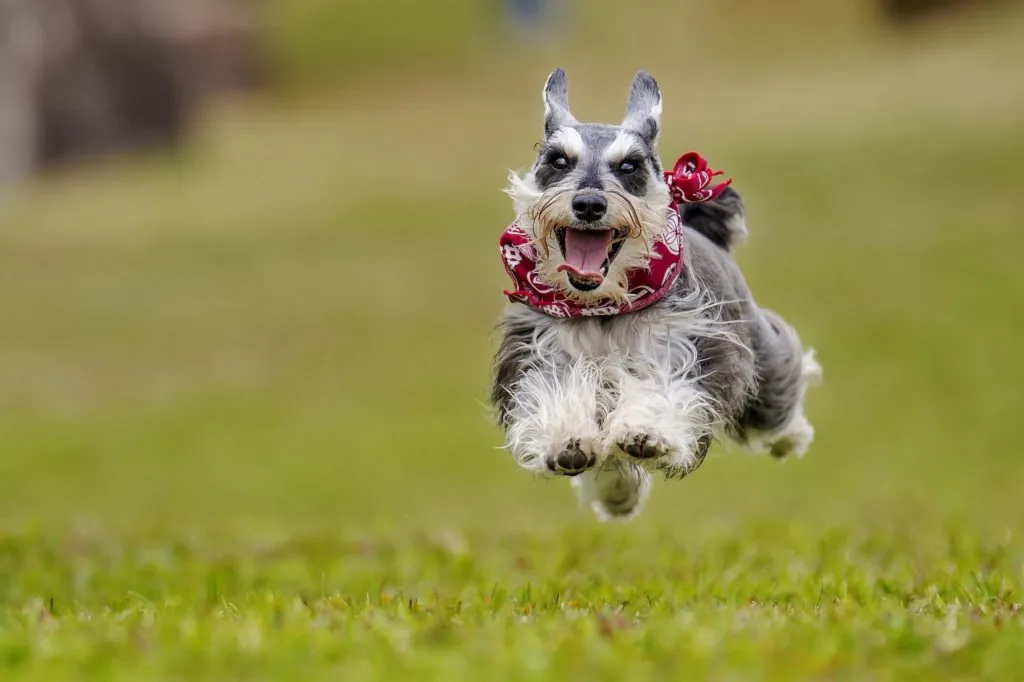
With their bushy eyebrows, big beard and even bigger personality, Miniature Schnauzers are hard to miss. But this little dog wasn’t bred to sit on a lap. It started out as a hard-working ratter on German farms. Here’s where the Miniature Schnauzer comes from, what it was bred for, and what it’s like to live with one today.
Miniature Schnauzer quick facts
The Miniature Schnauzer comes from Germany. Its ancestor is the Standard Schnauzer, a medium-sized farm dog that has been around since at least the 1400s. The name comes from the German word Schnauze, meaning “snout” or “muzzle,” a nod to the breed’s famous bearded face.
In the late 1800s, German farmers set out to breed a smaller version of the Standard Schnauzer. Most breed historians believe they crossed small Standard Schnauzers with smaller breeds such as the Affenpinscher and the Poodle. The earliest recorded Miniature Schnauzer was a black female named Findel, born in October 1888.
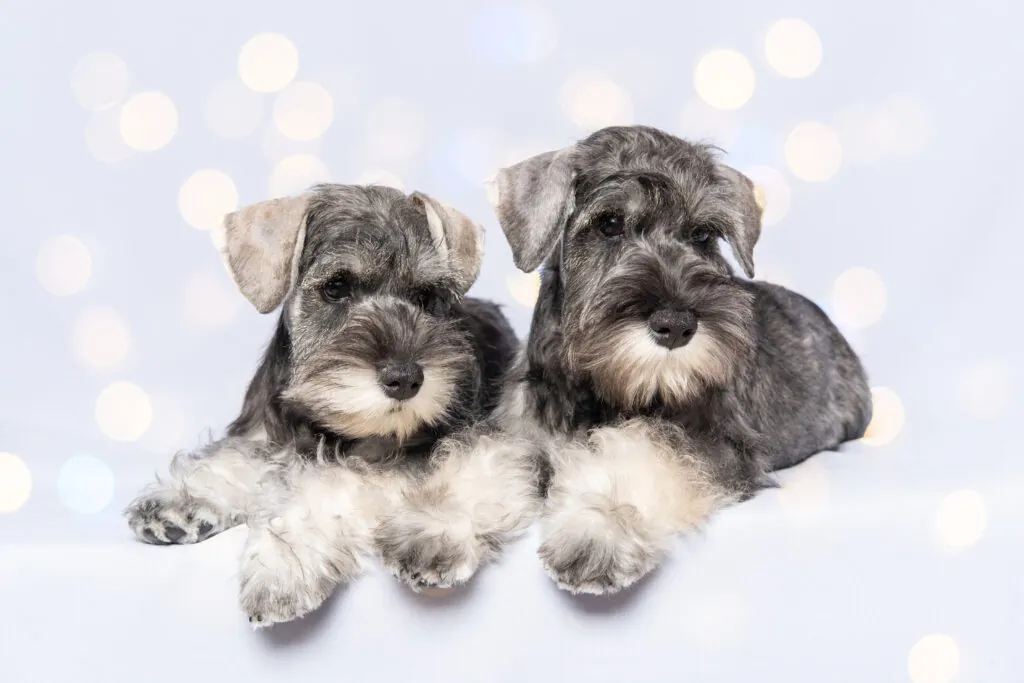
Miniature Schnauzers were bred to be ratters. On German farms, rats and mice got into grain stores and barns, and a small, quick, fearless dog was the perfect pest control. Their size let them get into tight spots, and their wiry coat and beard protected them from bites.
They also made good watchdogs, barking to warn the family when strangers came near. That alert, watchful streak is still part of the breed today.
Unlike most terriers, which were developed in the British Isles, the Miniature Schnauzer is entirely German. In the United States, the AKC places it in the Terrier Group, but its roots are different from the British terriers’.
Today the Miniature Schnauzer is the most popular of the three Schnauzer breeds, and it’s far more likely to be found on a couch than in a barn.
| Miniature | Standard | Giant | |
|---|---|---|---|
| Height | 12–14 in | 17.5–19.5 in | 23.5–27.5 in |
| Weight | 11–20 lbs | 30–50 lbs | 55–85 lbs |
| Original job | Farm ratter | Farm guard and ratter | Cattle driver and guard dog |
| AKC group | Terrier | Working | Working |
| Lifespan | 12–15 years | 13–16 years | 12–15 years |
All three share the same wiry coat, beard and eyebrows. The Standard is the original breed, and both the Miniature and the Giant were developed from it.
This is a dog with a lot of personality in a small package: smart, friendly, funny and very loyal. Miniature Schnauzers love to be wherever their people are, whether that’s following you from room to room or curling up next to you at bedtime.
A few traits to know about:
A Miniature Schnauzer stands 12–14 inches tall and usually weighs about 11–20 pounds. Their wiry double coat sheds very little, but it does need regular care:
With good care, Miniature Schnauzers often live 12–15 years. Like many breeds, they can be prone to a few health issues:
Regular vet visits, a healthy weight and a good-quality diet go a long way.
Miniature Schnauzers are lively but not hyper. A couple of brisk walks and some playtime each day are usually enough, and many love a game of fetch. They adapt well to apartment life as long as they get their exercise. On cold Michigan days, indoor games help them burn off energy. See our indoor games for puppies and small dogs.
They’re smart and learn quickly, but they can be a little stubborn. Short, upbeat, reward-based training works best, and early socialization helps them grow into confident, friendly adults.
✓A great fit if you…
✕Maybe not the best fit if you…
They were bred in Germany in the late 1800s as farm ratters, catching rats and mice in barns and grain stores. They also served as watchdogs.
Germany. They were developed from the larger Standard Schnauzer, most likely by crossing it with smaller breeds such as the Affenpinscher and the Poodle.
Usually 12–14 inches tall and about 11–20 pounds.
Very little. Their wiry double coat is low-shedding, but it needs brushing a few times a week and regular clipping.
Yes, usually. They’re affectionate, playful and sturdy for their size. Early socialization and training help with barking and chasing.
Looking for a small, low-shedding puppy in Michigan?
We don’t raise Miniature Schnauzers, but if you love a small, sturdy, low-shedding dog with a big personality, meet our Maltipoo, Morkie and Shichon puppies. They’re born and raised on our family farm near Hersey, Michigan.
