
Michigan winters are long. When the driveway is iced over and the wind chill is below zero, a walk around the block isn’t happening, but your puppy’s energy doesn’t take the day off. A bored puppy finds its own entertainment, and that usually means chewed socks, shredded tissues, or a sudden interest in the couch cushions.
The good news: you don’t need a big house or a yard to tire out a puppy or small dog. As the ASPCA points out, indoor enrichment keeps dogs happy, healthy, and better behaved, and a few minutes of brain work can wear out a puppy as much as a long walk. Here are eight easy games that fit in an apartment, a living room, or a hallway.
Before you start: puppy play rules
Hide-and-seek works your dog’s nose, ears, and memory at the same time. If your dog knows “sit” and “stay,” ask them to stay in one room while you hide behind a door or the couch, then call their name. If your puppy is still learning to stay, have a family member hold them gently while you hide.
When your dog finds you, celebrate with praise and a treat, then hide again. Start with easy spots in plain view and make them harder as your dog gets the hang of it.

Dogs explore the world through their noses, but the inside of your house doesn’t change much from day to day, so give that nose a job. Let your dog watch you place a treat on the floor a few feet away, say “find it,” and let them grab it. Once they understand the game, hide treats in harder spots while they wait in another room: behind a door, under the edge of a rug, or inside a cardboard box.
For a fun variation, put a treat under one of three upside-down cups and let your dog sniff out the right one.
Training is one of the best indoor activities there is, and it takes up only a few feet of floor space. Even if your dog already knows the basics, short practice sessions keep those skills sharp and give their brain a real workout.
Practice “sit,” “down,” “stay,” and “come” in different rooms, then add something new, like “shake” or “spin.” Keep sessions to a few minutes, reward every success, and stop before your puppy loses interest.
Yes, you can teach your dog to help clean up. Start by teaching them to pick up a toy and drop it into your hand, rewarding each try. Then hold your hand over a low toy basket so the toy lands inside, and add a cue like “clean up.”
With a few days of short practice, many dogs learn to put their toys away on command. It’s a fun trick for guests, and it keeps your dog busy while you finish your own chores.
Tug is a great way to burn energy in a small space, and it builds the bond between you and your dog. A few simple rules keep it safe and fun:
Letting your puppy win now and then keeps the game fun, and the “drop it” practice keeps you in charge.
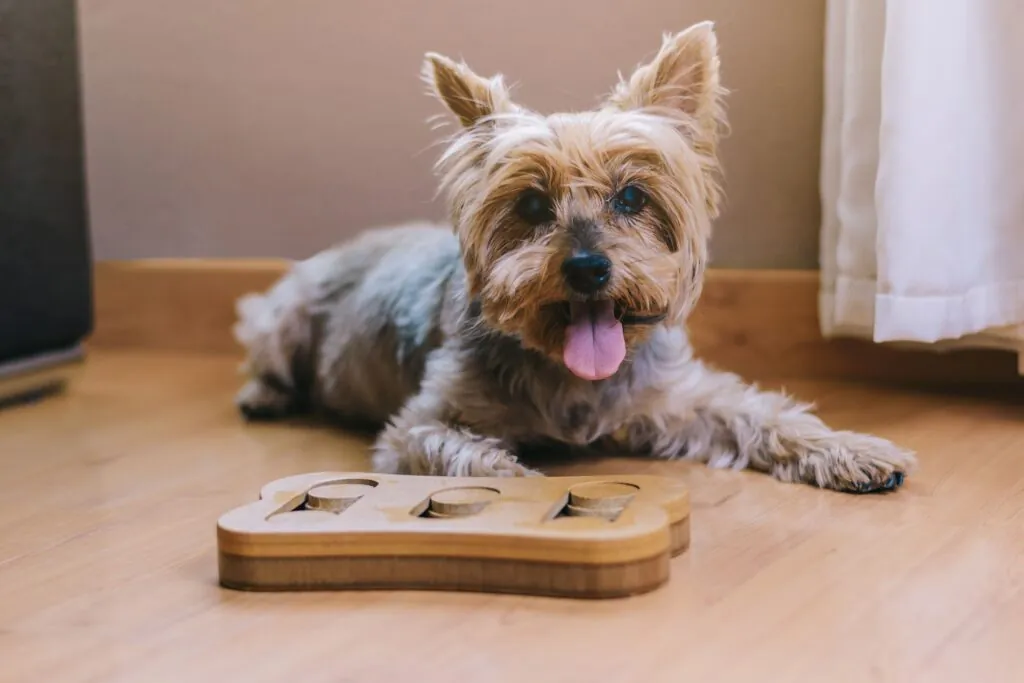
Puzzle toys are perfect for the times you need your dog busy while you work from home or cook dinner. Your dog has to slide, flip, or nudge pieces to get the reward, which is real mental exercise.
Start with an easy puzzle so your dog succeeds quickly, then move to harder ones. A stuffed Kong is a classic: fill it with part of their regular food, add a little plain pumpkin or plain yogurt, and freeze it for a longer-lasting challenge. If your dog is watching their weight, use part of their regular meal instead of extra treats. (See our recommended food for puppies and dogs.)
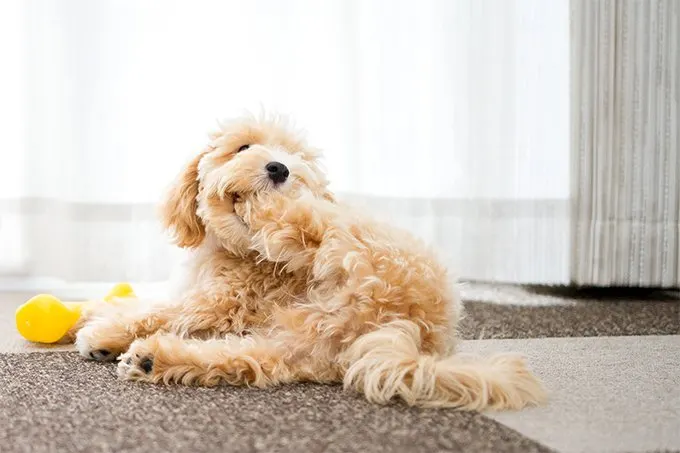
Some dogs learn the names of dozens of toys. Start with one favorite. Say its name every time you play with it, then ask your dog to “get the ball” and reward them when they bring it back.
Once your dog knows one toy, add a second and practice choosing between the two. Over time you can put several toys in a pile and see if your dog picks the right one by name.
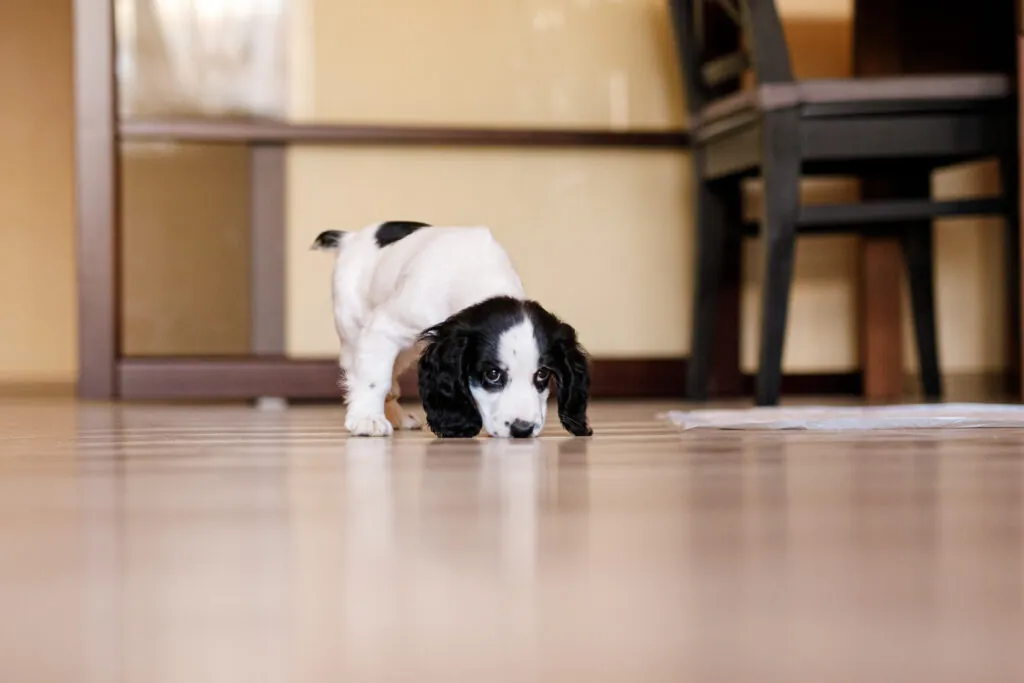
With a little planning, your living room becomes an agility course. Use what you already have: couch cushions to climb over, a cardboard box or blanket draped over two chairs for a tunnel, and chairs to weave through. Put a treat at the finish line so your dog has to sniff out the prize.
Kids love helping design the course. Keep everything low for puppies and small breeds. Jumping down from furniture is hard on young joints, so skip anything higher than your dog’s elbows.
A dog without enough physical and mental exercise will find its own outlets, usually your shoes or your furniture. Mixing a few of these games into each day keeps your dog’s body and brain busy, even when it’s too cold to go outside. For more tips on life with a new pup, read Getting Ready for Your New Puppy.
Looking for a puppy that fits your home?
Our family raises Maltipoo, Morkie and Shichon puppies near Hersey, Michigan. They’re small, family-raised and well suited to apartment and indoor life.
Several short sessions spread across the day work best. Young puppies tire quickly, so 5–10 minutes of play or training at a time, followed by a nap, is plenty. Older puppies and adult dogs can handle longer sessions.
Yes, when you keep it gentle and follow a few rules: use a tug toy, teach “drop it,” pause if teeth touch skin, and tug side to side at your puppy’s level rather than pulling up, especially while they’re teething.
Puzzle toys, a frozen stuffed Kong, and a safe chew are your best tools. A short training or “find it” session before an important call also helps your dog settle down afterward.
Small breeds love nose work, hide-and-seek, short trick-training sessions, and puzzle toys. These games tire them out without hard jumping. Learn more about each breed: Maltipoo, Morkie and Shichon puppies.
